Long time ago, in a different life – read while studying – I fell in love with a Japanese anime called Cowboy Bebop. It combined emotional gangster story with space adventure involving bounty hunters, Japanese humor, quirky characters I adored and bebop music that I still come back to. It was a strange time for the market, I still don’t fully understand why they decided to fund it, but those episodes still hunts me.
However, then it came time for romantic comedies, robots and samurais.
And then, by surprise – thank you youtube – I found next series created by almost the same team. It is called Michiko and Hatchin or Finding Paradiso. It’s full of action, almost Brazilian gangs, violence and emotional stories. It is not as good as Cowboy, but still there was a lot of heart put into it and I don’t really gather why it is not popular -> I found six years after it was aired only it by mere coincidence despite being interested in Japanese animation. See more about the show here =>Michiko & Hatchin
Being really into it, I made my first moving pixel art gif and decided to share it. (still needs a lot improvement, but getting there :D)
I’m a great fan of the moc documentary “What we do in the shadows” about group of vampires who barely fit in today’s society. It’s awkwardly funny and characters are awesome. I also started to train my pixel art skills. Below my try to capture Vlad, Vigo, Deacon and Petyr.
This time, a fan art for The Moon Is a Harsh Mistress (1966), a science-fiction novel by American writer Robert A. Heinlein, about a lunar colony’s revolt against rule from Earth. Good read. Pencil.
a.k.a. What is synthetic identity fraud and why fraudsters target Newborn SSNs?
I know that the issue is not a new one. The identity fraud – taking others personal information (SSN, name, birth-date) to commit a fraud – is present in society at least since 1930’s. However, now more than before US Newborns are exposed to this risk. The issue should be talked about as much as possible to prevent kids from harm.
Come with me on a short journey to understating how such fraud is committed and armed with this knowledge be prepared to protect those who are too young to do it by themselves.
What is synthetic identity fraud?
The difference between identity fraud and synthetic one is that a fraudster instead of using someone identity to impersonate him/her is creating a new one combining real and phony information.
Basing on Securefact blog: “In 2013, the FBI discovered a $200 million credit card scam involved the creation of 7,000 new identities. (…) Today, synthetic identity fraud accounts for 80-85% of all identity fraud in the US according to the Federal Trade Commission. By 2018, Equifax says synthetic ID fraud will have risen to $8 billion in credit card fraud losses annually.”
Key factors that the synthetic fraud is on the rise (in no particular order)
Credit score. There are significant rewards associated with a good credit report: more credit is made available at a lower interest rate which is crucial for obtaining advantageous card, student or house loans. You are basically trying to create the best credit history to get better offers from the start. Newborns and kids don’t have bad credit history as the never started to create one.
Change how SSNs are generated. Before, the last 4 digits of SSN number was person date of birth. Thanks to that everyone could potentially observe if an adult individual was using child SSN. Now the number is randomly generated.
Everyone wants your SSN number. SSN is your basic way to identify yourself. Banks, credit agencies, brokers, government tax database, universities and healthcare institutions – the more entities hold your number, the bigger chance your data will be leaked or stolen by fraudsters.
Less face-to-face business. In our age, the demand for more mobile solutions let us open account through internet without human contact.
The availability of credit and speed of credit decisions. You can open an account in few minutes and usually your profile will be evaluated by a program. Until a human will review the activity on the account, a month may pass. The fraud is long gone with money then.
Consequences are visible long after the fraud. When SSN is stolen, the kid and his parents have no idea the fraud occurred until they decide to apply for a college aid, first high-school job, driver’s license or student loan. The money and perpetrator would be almost impossible to trace then.
How it works exactly?
It is scary how easy the whole process is. According to Brett Johnson, prior fraudster now expert in fraud prevention, fraudster buys on black market a newborn SSN for 5 USD. Then with it he applies at an CRA and bounds that SSN number with a name, a PO box address and email of his choosing to start a credit file, which from now will trace that SSN fake identity credit history. Then using this identity he applies for a credit card. Doing it fraudster can made around 20,000.00 USD a month. However, after few credit card loans, the identity is burned and the process needs to be started from the beginning.
More robust fraud would include setting up a LLC company, usually in Delaware where law is less strict, linking it to the SSN and letting it age at least a few months. There might be even a website created for the business to appear more legitimate.
With this basic knowledge, check out the links below and learn more!
I read Absalome Absalome! by William Faulkner and 2001: A Space Odyssey by Arthur C. Clarke. I need to watch film still. Below my sketches regarding those books.
In my spare time I’m knitting and crocheting. The blue one still needs additional ball of yarn, the orangy one is finished – based on Haapsalu sall book – lovely traditional Estonian shawl pattern.
Joonega hagakiri patternOcean waves with foamy finish…
Recently I’ve read less novels and more historical books. This year it needs to change. That’s why I decided to start the 30 Book Challenge. Within 6 months I will read 30 books and for each I will draw a small illustration. I’ve started with two books written by Kazuo Ishiguro: “Never Let Me Go” and “The Remains of the Day”.
I want to share here my thoughts on his books, Ishiguro writing style and his writing process.
Who is Kazuo Ishiguro and why should you care?
He was awarded a Nobel Price in Literature in 2017 and as such he joined the pristine group of writers you should know something about. He was born in Japan and moved with his parents to Great Britain when he was six. He is still considered by Japan a Japanese writer, despite by his own admission he “couldn’t speak Japanese very well” and “felt British” spending his whole life in the UK. When he was young, he wanted to be a singer and a songwriter. That way he worked on his elliptic style visible in his writing style. For him “that was all very good preparation for the kind of fiction I went on to write. You have to leave a lot of meaning underneath the surface.”
His writing style
When you read a book, you don’t have a direct contact with the writer. He can only influence you by the words he chosen to be left on pages. Each writer does it differently. Kazuo Ishiguro concentrates on characters and through their thoughts and reactions to outside world and through their relationships with others, he creates stories to move readers emotionally. Despite he stated otherwise, I think that his style is a fusion between minimalistic Japanese (he was influenced by it enough in his first years of life), mastered classic English and years of writing. He holds his ideas within him, sometimes for years, so they can mature, then read about the topic extensively and writes notes, or fragments and then compile it into one cohesive work. Sometimes he uses so called “Crash”: he shuts himself up in a room to write for around 10 hours a day, 6 days a week without mail, guests or internet and immerses himself in story world so far to make it his reality. Thoughts of his main characters jump from current time to past incidents fluently, keeping readers interested in woven stories. He is almost as slick as Proust doing it. It would be hard to put his books in one genre, he mixes sci-fi, history and drama. All of his stories have a similar arc, not repetitive, but you can feel it in atmosphere of the books. The main character usually needs to confront his past, his decisions, his self delusions or world delusions he was wrapped in through his whole life and accept the consequences.
The Remains of the Day (1989)
It is his third novel written using Crash method within 4 weeks. It is set in post-war England, and tells the story of an elderly butler confronting his memories of a long life service. I really like the period between Victorian England and post war England. The little bits, that creates the background for the main character – how those big mansion functioned in the past – I enjoyed greatly. The character is stubborn and proud and has problems with adjusting to changing times. He tried so much to explain logically each decision he had made. More he regretted them, more he tried to explain and distance himself from them. I loved it from beginning to the end. The best are fragments when almost three things happened at once and it is described so clearly, that I had no problem following the action and in the same time feel the urgency of situation.
The novel was made into film starring Anthony Hopkins and Emma Thompson – you can watch it on Netflix.
Never Let Me Go (2005)
This is a sci-fi novel. Kazuo Ishiguro was thinking about this idea for a few years – to write about kids/young adults. He tried to find a good reason, how to put them in a dramatic situation. And he found one. We follow three main characters and their interaction from their infancy up to their adulthood living in a type of a boarding school. From the beginning there is something really bad hanging over those kids. There is something wrong, but it is hard to pin it down. The way how children act is very plausible, but as I don’t really like kids, I was a little bit bored. And the big reveal, oh the big reveal…. I really don’t like it. I don’t like it, because there is no way it would work. Not medically ( too much risk for all involved parties), not economically (it would be to expensive). And I really hate, when a sci fi novel tries to sell me an idea, that wouldn’t work. But I know at least one person, who thinks it is plausible, so for each their own I suppose.
SPOILERS:
In the future, after a big war there is a big industry of cloning people. People are cloned and then the industry takes care of those clone kids for 20 years so they can grow up and then make them to be organ donors and give up their organs in multiple operations. It is just hard for me to believe someone would be spending so much money to keep those kids alive for 20 years in somewhat good health (the book insinuates that they are not keep in good conditions – only main characters were lucky to get the best treatment – and it will only get worse, but the reason why a donor in our world needs to be a healthy human is to get a good quality organ and not add any additional diseases for recipient). We can grow ears on mouse, you can get a transplant from a pig (yep, check from where come hearth valves) and we are starting to grow separate organs in lab. All of those method would be less expensive. I would believe clone theory if the clones were growing rapidly so it would take less time (a year 2 or 5) for the organs to develop inside their bodies. Or, it would be only for super rich people who keep them to get spare parts if shit happens (check the film “The Island” (2005)). Also the clones are suppose to be hated by people or cloned from lowlifes, but people just talk about it, we are not shown those situations.
:SPOILERS END
Despite my problems with the “big reveal”, I still liked the core of the story – how mine characters faced the situation.
Read or not?
Definitely check out at least one of Kazuo Ishiguro novels. It is worth it. If you are interested in post WWII Japan and how Japanese think go for A Pale View of Hills (1982) or An Artist of the Floating World (1986). If you like post WWII England, try out The Remains of the Day (1989). If you dare to go through an adventure similar to Proust, check out The Unconsoled (1995) – supposedly his best book. If you are more interested in old school detective stories, there is When We Were Orphans (2000). You are a sci-fi fan? Never Let Me Go (2005) or The Buried Giant (2015) is for you – there are some controversies in relation to that book, check out the link below and interview with Neil Gaiman. Beware, it is long.
I had a bullet journal before it was popular. I started my first bujo when I finished colleague. I put stickers inside. I made it my daily diary, then a notepad for story ideas and dreams. I reviewed all shows, books and theatrical spectacles I saw there. I doodle in it and listed all to-do’s never in alphabetical order. I’ve never stopped since.
Now, that mix of an agenda, diary and task listing is so popular (search for bullet journal in yt and you will get hundred of results), there are even book written how to start your personal bujo. See for reference:
Bullet Journal: A Practical Guide How to Start A Bullet Journal.
Inspirational Examples, Creative Ideas, Easy-To-Follow Illustrations (Control
Your Life, Reach Your Goals, Develop Powerful Habits)
The Bullet Journal
Method: Track the Past, Order the Present, Design the Future
The 365 Bullet Guide:
Organize Your Life Creatively, One Day at a Time
So, should you start one?
Will bujo work for you?
Check out below questions.
Do you make notes always on sticky notes or free paper? Are
you just not convinced by electronic apps and you always have a small notepad
or agenda on you?
Do you like to
doodle?
Do you buy yearly 2 or 3 agendas because there is always
something wrong with the one you currently use? It is too big, too small, has
too little space or categories never meet with your needs?
Do you procrastinate a lot and needs nice daily/monthly to-do
lists to see how much time different tasks take daily and how much time you
have left for you hobby?
If you answered yes for more than one question above, you probably will dig bullet journalism.
What bujo offers?
It offers autonomy. You will be the one to decide where and what to write. How much space you need for notes, daily to do’s and other listings. How to make divisions or which notebook to chose et cet
The most important
thing is:
Don’t get overwhelmed!
You probably watched multiple yt videos with gorgeous hand
lettering headings and flowery patterns on margins.
But remember, in the first place, it suppose to be your personal agenda! Usually you won’t show it off anywhere, you will use it.
Start small
Try it for a month or two. Buy a medium size notebook that you like. Find a favorite pen and a highlighter. You will need also a pencil and a rubber to plan the potential look. A ruler might come in handy.
Usualy bujo’s have: symbol key and index at the beginning,
yearly calendar spread (for marking holidays, birthdays and other important
dates), monthly spread, weekly spreads, then additionally any to do lists that
you can came up with (books, tv shows, inspiration lists, habit, food, water
trackers, cleaning trackers, packing up lists).
Thinking about all of that can get you tired, before you
even start to use it.
Again, start small.
Loose symbol key and index – use only two or three symbols,
so you can easily remember what they mean. You also will be going through your
bujo on daily basis; for first months index won’t be useful.
Buy a sticker or the cheapest teacher’s calendar at store to get your yearly spread, cut it out and paste into your bujo.
Plan the monthly spread only for the first month. You can lists 30 days in a column, to just check if it works for you at all. Then plan only first week of the first month. Chose an optimal spread for you vertical, horizontal, onepage, multiple pages (see videos linked below to get idea what to chose).
Through first week you will check, how much space you really need. Or if you use agenda regularly, go through it and check how much space you might need.
It will take less time to plan one week than the whole year and you can go through some yt videos to get more inspiration with passing time.
At the beginning I recommend to leave out any fancy drawings. If you find the method useful, you can change it into a little work of art soon enough.
Just write
month/weekdays headings in capital letters. Mark them with highlighter or underline
them, if you wish.
After few month, you can add additional categories, lovely doodles, buy more stickers and chose quotes to adorn you bujo. Or go with the minimalism version.
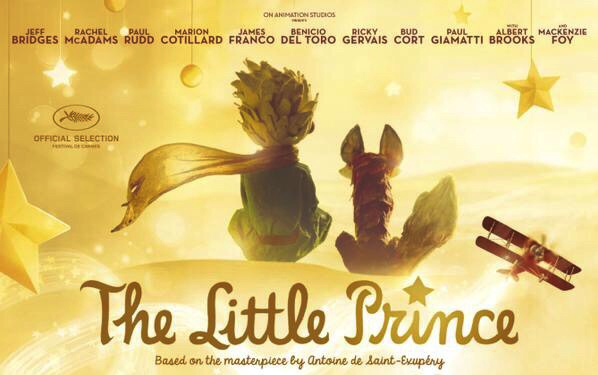
I’ve found a little gem within Netflix library. It’s an animated version of my beloved book “The Little Prince”. As no one appears to be talking about it (Why Youtube people, why?!?), here you will find a totally opinionated review of the film and a letter of gratitude towards the book.
Basics
To tell you the truth, I’m a little bit late
to the party.
The movie was released in 2015 in
France and then it was screened around the globe throughout that and next year.
I don’t think they put a lot money into PR, as I never saw any poster around my
town (it is really one of the biggest towns in my country, and believe me, I
would notice). It grossed 102 million with estimated budget of 81 million. I
wouldn’t call it a worldwide success, but it at least got back the investment
value. I easily can call it a labor of love. As a matter of fact, it won a
Cezar for the best animation picture – a French counterpart to Oscars. I’m
assuming that the part of the movie in stop-motion out of paper made everybody
crying out of joy. I was. And it is a freaking Little Prince movie!
The idea was born within French
producers and feed to Mark Osborne (Kung Fu Panda), future director of the
project. He was fed up with corporate productions, tried to go back into
independent animation and this was his big chance.
So… why nobody talks about it
anymore?
We will try to find out.
The story
The Little Prince was adapted
before and not once. The biggest question of the project was how to do it in a
fresh way? That was also my question seeing the title within Netflix suggestion
list. My first thought was, “Oh no, there we go again. American version of my
beloved book, sho sho!” My biases took over. Still, I decided to put it on. Why?
Because it got this gorgeous thumbnail. (Thank you Netflix, that you know, how
to promote your content.)
Story is divided into two parts.
The main with most focus and run time is a CG animation. The short version of
the book is in stop-motion made out of paper. As the paper clothes tore
frequently, they needed to be remade almost after each take. (I told you, labor
of love).
You could ask yourself, why would
you divide it anyway? Well, The Little Prince is a short book. You would never
stretch it into full 90 minutes. If you wanted to show it in cinemas and get
your money back, you need something more. Other, less cynic reason, the
director wanted to make a movie showing the impact of the book itself. How that
powerful story influence people. In an interview he stated that The Little
Prince was a milestone for his marriage. I remember that I read it in my
childhood and cited it for the longest time. I still use to allude to
friendship as “taming others” and “taking responsibility for those I tame”.
Osborn decided to tell a story about The Girl, who is
groomed to be a boring, sad adult, but only after meeting the Aviator and
reading parts of The Little Prince book, she discovers new world of
imagination.
Book vs Movie
What are the main changes between the book and the movie?
Only part of characters was moved
to the screen: prince, aviator, snake, king, economist, vain man and rose
garden are shown. The lighthouse keeper, the geographer and the drunkard are
totally missing. Of course Rose is also there, but all of the encounters are
short and only partial interactions are presented. The fox in the movie is a
toy, which the Girl values a lot and takes on a journey with her.
The message from the book is
there, but the charm of how the Prince gets others to ridicule themselves answering
his to the point questions is missing. De Saint Exupery created a fable with a
deeper meaning and his easy to understand style presents multiple allegories, inter
alia how as adults we easily get lost, forget how to see world with a child
curiosity and drown in vices.
On the other hand, the Little Prince book is just an excuse
to present a story taking place in our modern society. It is suggested that the
Girl read all of it and those parts we see are those which made the biggest
impact on her.
Moreover, as to not lose focus, the movie concentrates on the
idea of friendship and letting go, when the time comes, what you’ve
tamed/loved.
The movie strength comes from the main character The Girl. Her
strict mother planned her whole life to the minute, so she would become a
responsible, well adjusted adult. They moved to the neighborhood close to
school where she has blown the entrance exam, so she could attend it anyway.
She needs to learn everyday of her summer break, while her mother overworks
herself to be able to pay off the house loan. And then the whole plan goes haywire, as she
meets their neighbor The Aviator.
The way her life was planned and she is ok with it, it is
just chilling.
Then we have a part, when she goes on a journey to find an
adult version of the Prince, and she meets all characters from her version of
book. It is such a creativity fest.
The movie is not perfect, but just for those two fragments motioned
above, it is worth watching.
I hope it will make kids to read the Little Prince after.



 CorpoChick